 By admin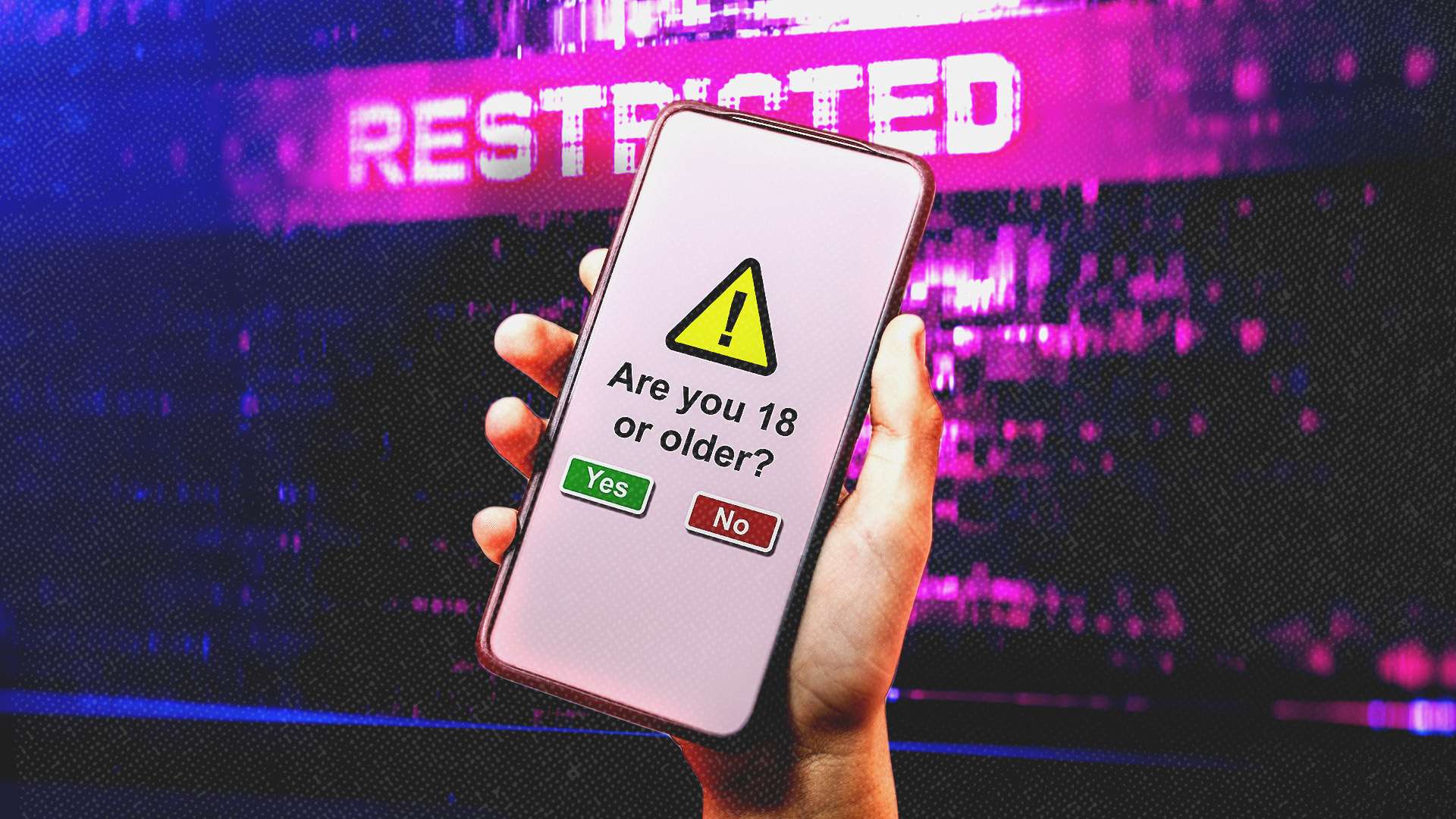
U.K. Prime Minister Keir Starmer wants tech companies to stop teenagers from sending and receiving nude images. But this ostensibly well-intentioned proposal would be a disaster for adult privacy.
Read more Texas Landowners Face a Difficult Decision: Allow Border Wall or Lose Right to Property
“I’m calling on tech companies operating in this country to introduce device controls that prevent children from sending and receiving sexually explicit images,” Starmer said on June 8, during London Tech Week. “If they choose not to, then we will act, and we will change the law.”
You are reading Sex & Tech, from Elizabeth Nolan Brown. Get more of Elizabeth’s sex, tech, bodily autonomy, law, and online culture coverage.
Starmer makes it sound as if what he’s proposing is easy and tech companies are simply being negligent by not doing it. But there is no simple—or non-invasive—way for phone and device companies to comply. And authorities gave tech companies just three months to implement these new controls.
Bringing on the Selfie Snoops
One track tech companies could take is heavier-handed monitoring of all text messages. Encrypted messaging would obviously be off-limits under this scheme.
An algorithm could determine whether images involved nudity or semi-nudity, and attempt to estimate the age of the person depicted. But humans would have to get involved at some point, too—to assess images, to review decisions, and so on. That means anyone—adult or minor—could have their most personal images subject to prying eyeballs.
And with fines and legal action possible, you can bet that phone companies are going to err on the side of caution. That means plenty of adults would be blocked from sending sexy images, too. There’s no clear way to tell from many photos—especially those that don’t show faces—if someone is 17 or 23 or 35.
Of course, age-assessing images would only half accomplish what Starmer says must happen. It wouldn’t be able to stop minors from receiving sexually oriented images, just from sending them.
Bringing on Universal ID Checks
To really do what Starmer wants, tech companies would have to identity check everyone at the device level. That means every mobile phone or tablet user would have to submit a government ID or biometric data to prove their age.
“Adults would still be able to take, share or view nude content through an age verification process,” as Reuters puts it.
That really drives home the dystopian aspect, doesn’t it?
If a British adult wants to send their spouse a topless photo, they had better be prepared to upload an ID card. If a British adult wants to receive a striptease video from a paramour, they must be prepared to have their face scanned first. If a British sex worker wants to text some sexy videos to clients, they’re going to have to expose their true identity to tech companies and probably whatever government agency wants to ask for that information, too.
And, of course, device-level verification means you’re going to get carded or face-scanned even if you have no interest in sexting. Most likely, everyone would have to do it (or else, at a minimum, face a range of restrictions on their device).
Starmer wants spyware to be installed on every single phone in the country — that’s unlikely to actually protect children but will raise significant risks for your privacy. https://t.co/pQXwz5twbU
— Matthew Lesh (@matthewlesh) June 8, 2026
Even with device-level verification, this scheme would still seem to require a lot of monitoring of minors’ text messages. In the name of protecting teens from people seeing them naked, we would be exposing their naked images.
Privacy Tradeoffs…for What?
For all of this, would the U.K. actually be able to stop minors from sending or receiving sexually oriented images? After all, text messages aren’t the only way to exchange photos. Even if you ban kids from texting and from social media (something Britain is also proposing), they can still access email, encrypted messaging platforms, private forums, Google Drive, Dropbox, and so on.
Either you entirely stop people under age 18 from communicating digitally, or you’re going to have an utterly toothless plan to stop them from sending sexually explicit images. And even if you take a hard line, it could still fail if kids can game the age verification process.
Australia’s under-16 social media ban has shown that kids are quite good at doing this.
Ultimately, all of Starmer’s scheme would be good for is making sure that there’s a verified identity attached to every single phone and tablet.
“Protecting children online is vital, but these are outrageous plans that will fail to address the underlying causes of online harm,” said Big Brother Watch in a statement. “This will only result in population-wide ID checks for all of us to use our phones, tablets and laptops.”
“No one in a democracy should need to show their passport just to get online,” it added.
Read more Police Kill 1-Year-Old Boy by Shooting Into Car of Suspected Shoplifters
This isn’t an issue just confined to the U.K., mind you. In the United States, device-level ID laws are gaining in popularity. “Two US states have already passed laws requiring your operating system to collect your age, and a federal law is under discussion,” notes PC Mag.
In The News
Do you have the right visa to post that reel? People visiting the U.S. on a tourist visa cannot take any photos or videos that they plan to post online in a way that could be monetized. Essentially, it’s illegal for foreign tourists to create content—and the Trump administration may be ready to step up enforcement of this rule.
“Immigration authorities have warned that individuals entering the country on a tourist visa may not use their stay to produce content intended to generate income on YouTube, TikTok, Facebook or other online platforms,” notes the Spanish newspaper El País.
“Coming to the United States with the sole purpose of creating content (as an influencer), thereby generating earnings from the United States while in the country, is considered work and requires the appropriate visa,” U.S. Customs and Border Protection and the Department of Homeland Security told El País. “People who enter the United States under a visitor program and receive income from a U.S. source would be violating the conditions of their admission status.”
This could mean deportation and restrictions on reentering the country.
The idea seems to be preventing people from working in this country but not paying U.S. taxes on their earnings. But is potentially squeezing out a little more tax revenue really worth banning influential tourists from sharing photos and videos of their time in this country?
On Substack
Anti-tech elites are out of touch. The sort of anti-Big Tech rhetoric we see coming from politicians left and right is not a populism-driven response, notes The Argument:
Big Tech firms are popular. In The Argument‘s most recent national survey, fielded from May 29 to June 3, most Americans had a favorable opinion of four large tech companies: Google, Amazon, Microsoft, and Apple.
For instance, 30 percent of the people surveyed had a “very favorable” view of Amazon, and an additional 32 percent had a “somewhat favorable” view. Just 19 percent had a very or somewhat unfavorable view.
Google was viewed somewhat favorably by 35 percent of those surveyed and very favorably by an additional 29 percent.
This is in keeping with previous polling on big tech company popularity:
What is the most popular institution in America? It’s not a government agency — it’s Amazon, followed closely by the military, Google, and the police.
That’s according to a 2023 survey from the Harris Poll and the Center for American Political Studies at Harvard. And it’s not a one-off: Harris and CAPS found that Amazon was the second-most popular institution (after the military) in a 2021 survey. Morning Consult’s 2023 polling found that Amazon was the third-most-trusted brand in the United States and the single most trusted tech or e-commerce brand.
The Argument suggests that hating Amazon may be a “luxury belief.” Amazon’s favorability was greater among people with lower incomes and people who did not have college degrees.
Interestingly, conservatives were also more likely than liberals to view Amazon favorably. Nearly three-quarters of those who described themselves as “very conservative” had a somewhat or very favorable view. And 72 percent of those who simply called themselves conservative had favorable views. Meanwhile, just 53 percent of people labeling themselves as liberal and 38 percent of those who called themselves very liberal viewed Amazon favorably.
Read This Thread
Last week, Sen. Banks proposed a FTC-enforced national age-verification for site with “sexual material harmful to minors” — the SAFE for Kids Act.He believes this should include “gender ideology.”
— Mike Stabile (@mikestabile.bsky.social) 2026-06-15T16:52:01.898Z
More Sex & Tech
• In a big press conference featuring the Nebraska governor and the FBI, Col. Bryan Waugh of the Nebraska State Patrol said that “the Nebraska Information Analysis Center today fields about 30,000 human trafficking-related tips a year, compared to a few thousand annually decades ago,” notes The Plains Sentinel. But when the paper reached out to state police for a fact check, a spokesman said there were actually only 88 calls in 2025.
• “The Federal Communications Commission (FCC) wants to stop pesky robocallers, but its proposed fix might make it extremely difficult for Americans to have burner phones,” reports Reason‘s Meagan O’Rourke.
• Republican attorneys general are going all in on trying to restrict abortion pills by declaring them a water contamination risk. Some “14 state officials wrote in a Friday letter to EPA Administrator Lee Zeldin that increased access to mifepristone is ‘resulting in tons of chemically tainted medical waste being flushed into American waterways,'” notes The Huffington Post. (As I wrote in this newsletter last year, “no one has produced any evidence that abortion pills are getting into the water supply in sufficient amounts and/or causing health problems.”)
• Inside the social gaming platform Roblox’s attempts at age verification. As of recently, all users must show ID or undergo biometric age checks in order to prove their age.
• Ohio lawmakers want to mandate that schools teach people to get married before having babies. “Ohio Senate Bill 276 passed 58-36 during [the June 10] House session and the Ohio Senate concurred with the changes made to the bill later that night before going on summer break,” the Ohio Capital Journal reports.
Read more Trump Sees World Cup Visitors as a Threat, But America Sees a Chance for Hospitality